peter (admin) -

Introduction to Kubernetes Architecture
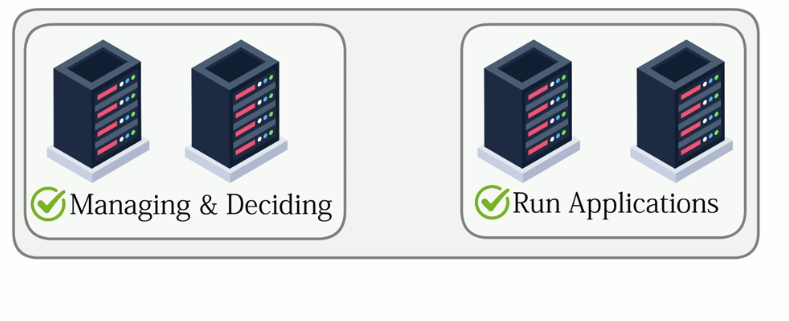 We start by learning the control plane and worker nodes and how they work together.
In a Kubernetes cluster, all servers do not perform the same role. Some servers are responsible for managing and deciding, while other servers focus on running the applications. This separation keeps the cluster stable and easier to manage, especially as the environment grows.
The Control Plane
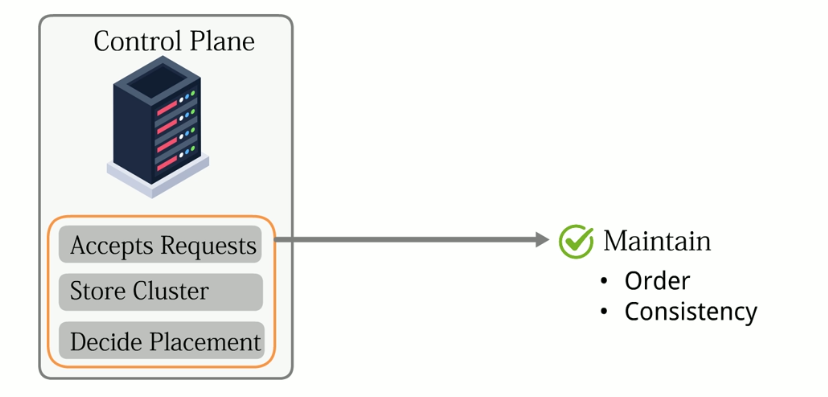
The servers that handle management tasks are known as the control plane. The control plane acts as the brain of the cluster. It keeps track of the current state, accepts instructions, and makes decisions about where applications should run. These servers handle coordination tasks and do not run user applications.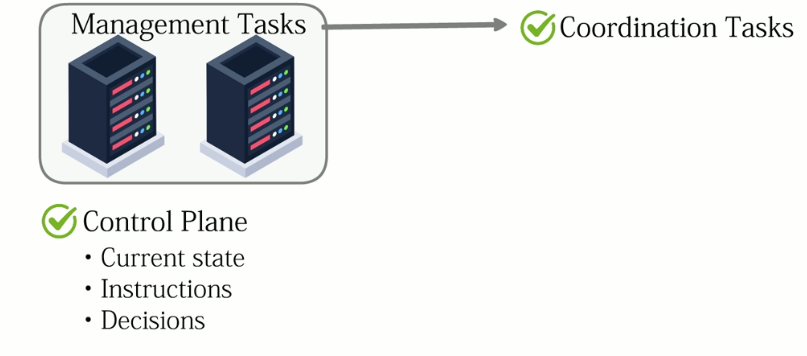
Within the control plane, responsibilities are divided. One part accepts requests, another part stores cluster information, and another part decides placement. These components work together to maintain order and consistency across the cluster. The control plane decides which worker node should run the application. When an application needs to run, it is placed on one of these worker nodes and that node is responsible for keeping it running.
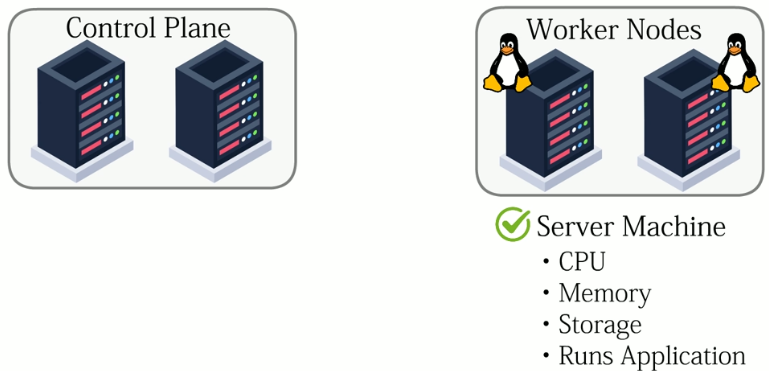
Worker Nodes
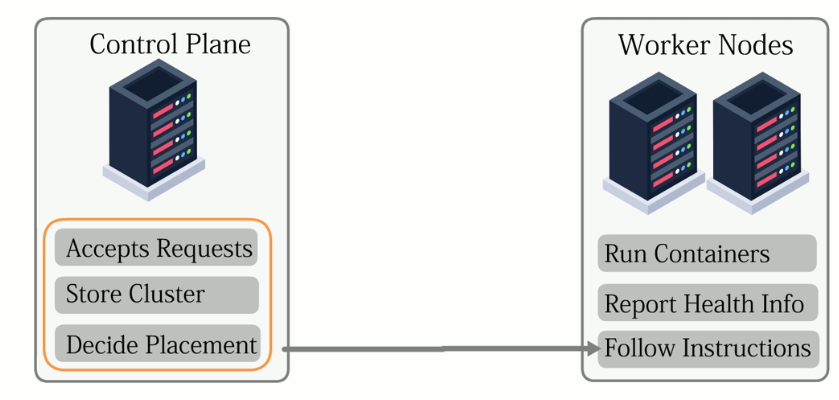
The servers that run applications are called worker nodes. You may notice we also call a worker node a server machine because it is a full Linux server with its own operating system, CPU, memory, and storage, and it runs application workloads just like any other server.
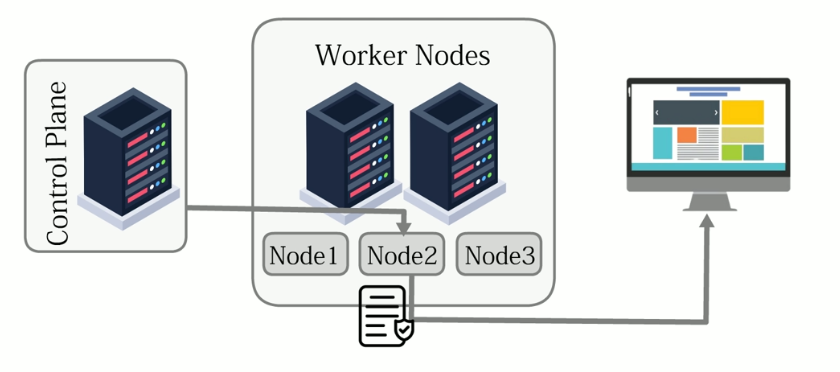
 Worker nodes also have their own duties. They run containers, report health information, and follow instructions from the control plane. They do not make cluster-wide decisions; their job is simply execution.
Analogy: Main Office and Branch Offices
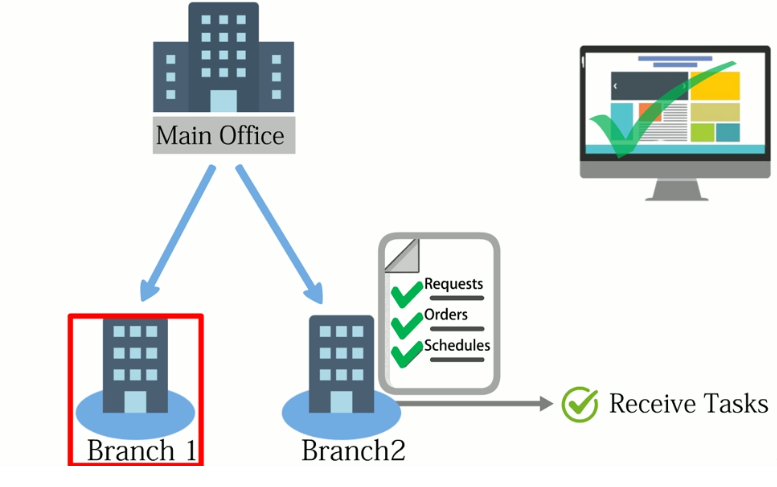
For example, imagine a company with a main office and several branch offices.
- The Main Office (Control Plane): Decides what work needs to be done and how it should be done. It assigns tasks like handling customer requests, processing orders, and managing schedules. It also checks progress and makes sure rules are followed.
- The Branch Offices (Worker Nodes): Receive these tasks from the main office. They focus on completing customer orders and daily operations. They do not make decisions or change company rules.
If one branch office has a problem, the main office assigns the work to another branch. This keeps the work moving without interruption. Because tasks are clearly divided, the whole company works smoothly.
Conclusion
This is a simple explanation of how the control plane and worker nodes work together to manage applications in a Kubernetes cluster.
Comments (0)
There are no comments yet. Be the first to comment.
Log in or register to leave a comment. all comments are subject to admin approval