peter (admin) -

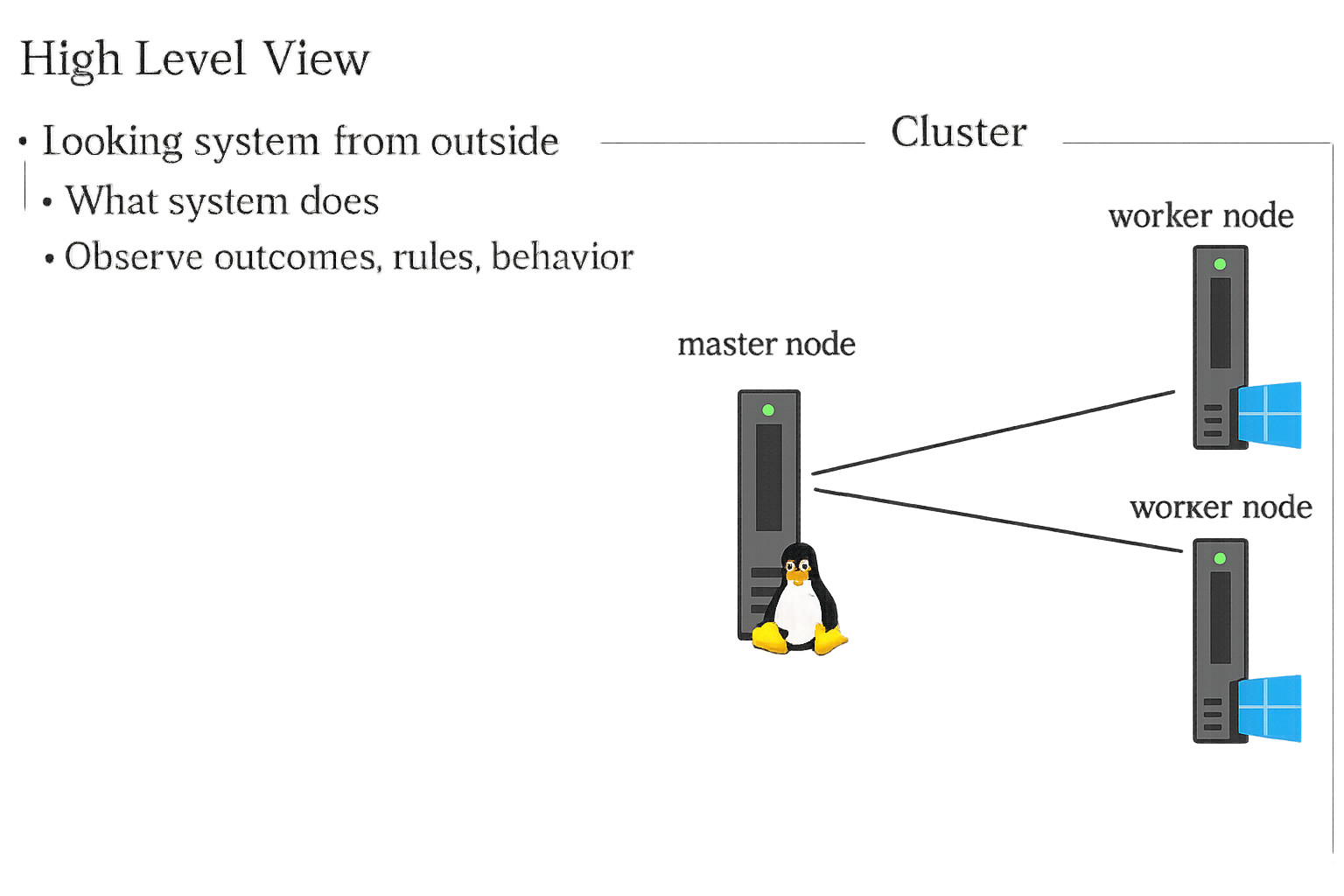
A Kubernetes cluster uses a Master-Worker architecture where the master node manages the cluster and the worker nodes run your actual applications. Together, they automate container deployment, scaling, and management.
The master node, or 'control plane' is the "brain" of the system. It makes all global decisions, detects events, and responds to changes in the cluster. The master does not run your applications
Worker nodes are the "muscle" of the system. They are the physical or virtual machines that actually run your applications inside containers
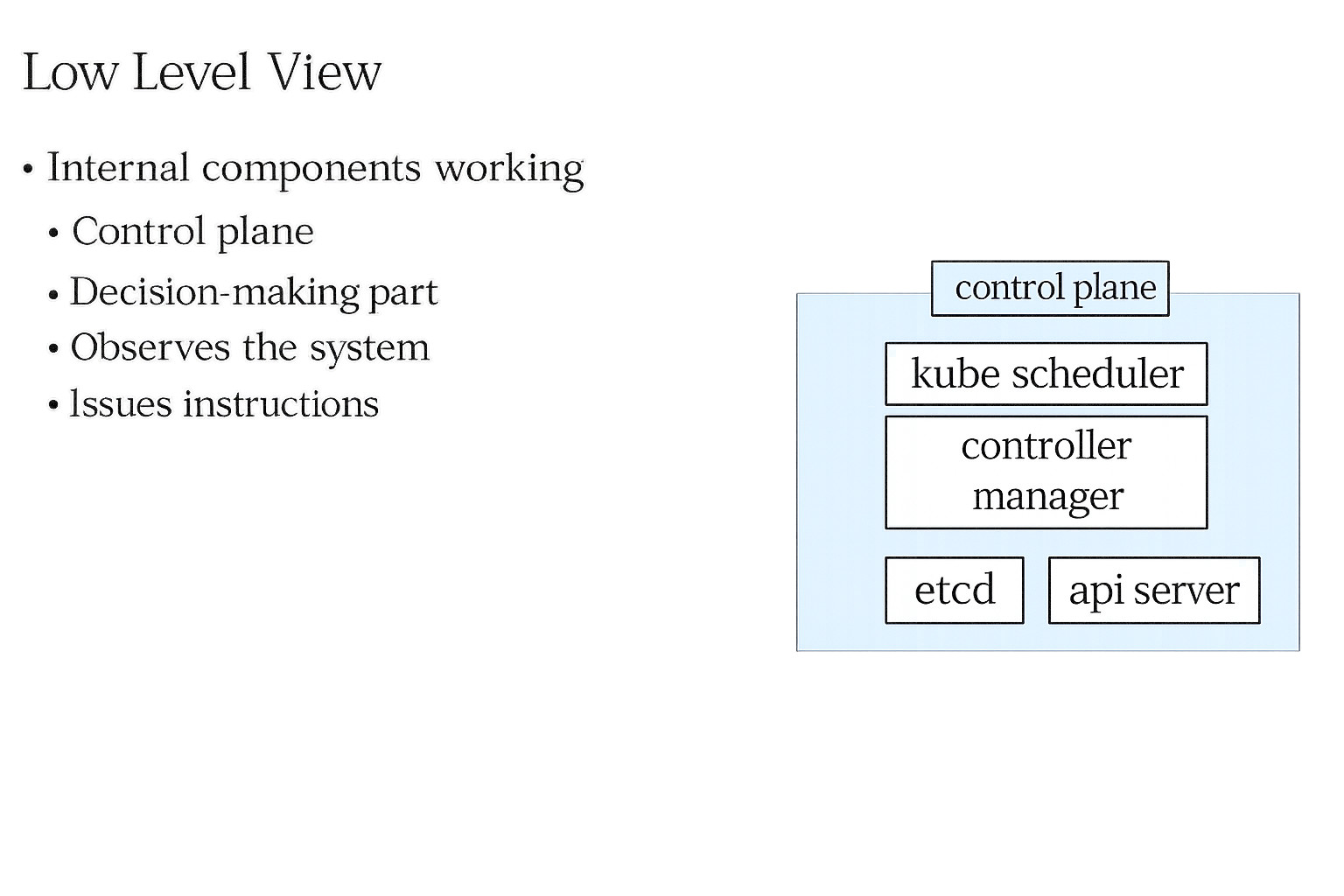
The components of the control plane include
- kube-apiserver: The front door that receives all commands and communicates with the rest of the cluster.
- etcd: The cluster's database that stores configuration data and current state.
- kube-scheduler: The component that decides which worker node will host a new application container.
- kube-controller-manager: The service that watches the cluster and fixes things if the current state differs from the desired state
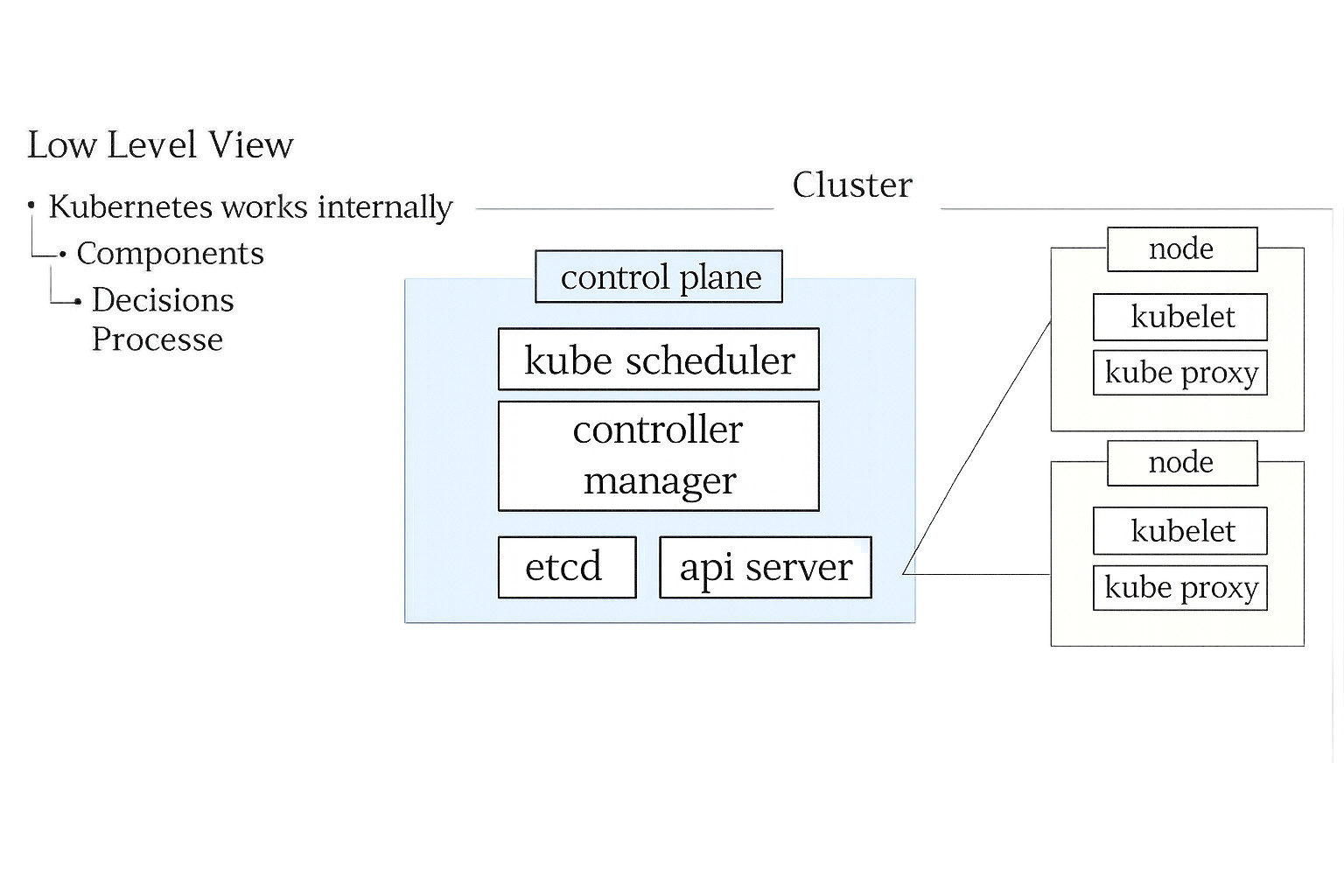
kubelet is the agent that runs on every node.
Think of it as the node manager.
Its job is to communicate with the control plane and make sure the node is running the pods it has been assigned.
The kubelet is responsible for:
- starting containers
- stopping containers
- mounting volumes
- health checks (liveness/readiness)
- reporting node status
- reporting pod status
kube-proxy is responsible for networking.
It runs on every node. Its job is to make Kubernetes Services work.
It provides:
- load balancing
- service discovery
- network forwarding
- iptables/IPVS rules
Simple analogy
| Component | Like... |
|---|---|
| Node | A house |
| kubelet | The caretaker who keeps the house running |
| kube-proxy | The postman and traffic controller who directs visitors to the right room |
| Pod | A room inside the house where an application lives |
| Control Plane | The manager deciding which house gets new work |
In conclusion:
- Node: The worker machine that provides CPU, memory and storage to run pods.
- kubelet: The agent on each node that communicates with the control plane and ensures the required pods are running.
- kube-proxy: The networking component on each node that implements Kubernetes Services by routing and load-balancing traffic to the correct pods.
Comments (0)
There are no comments yet. Be the first to comment.
Log in or register to leave a comment. all comments are subject to admin approval